RTSP - The Real-Time Streaming Protocol Explained - A Comprehensive Guide
Have you ever wondered what actually happens behind the scenes when video from an IP camera reaches your server, and then appears in OBS or a monitoring system?
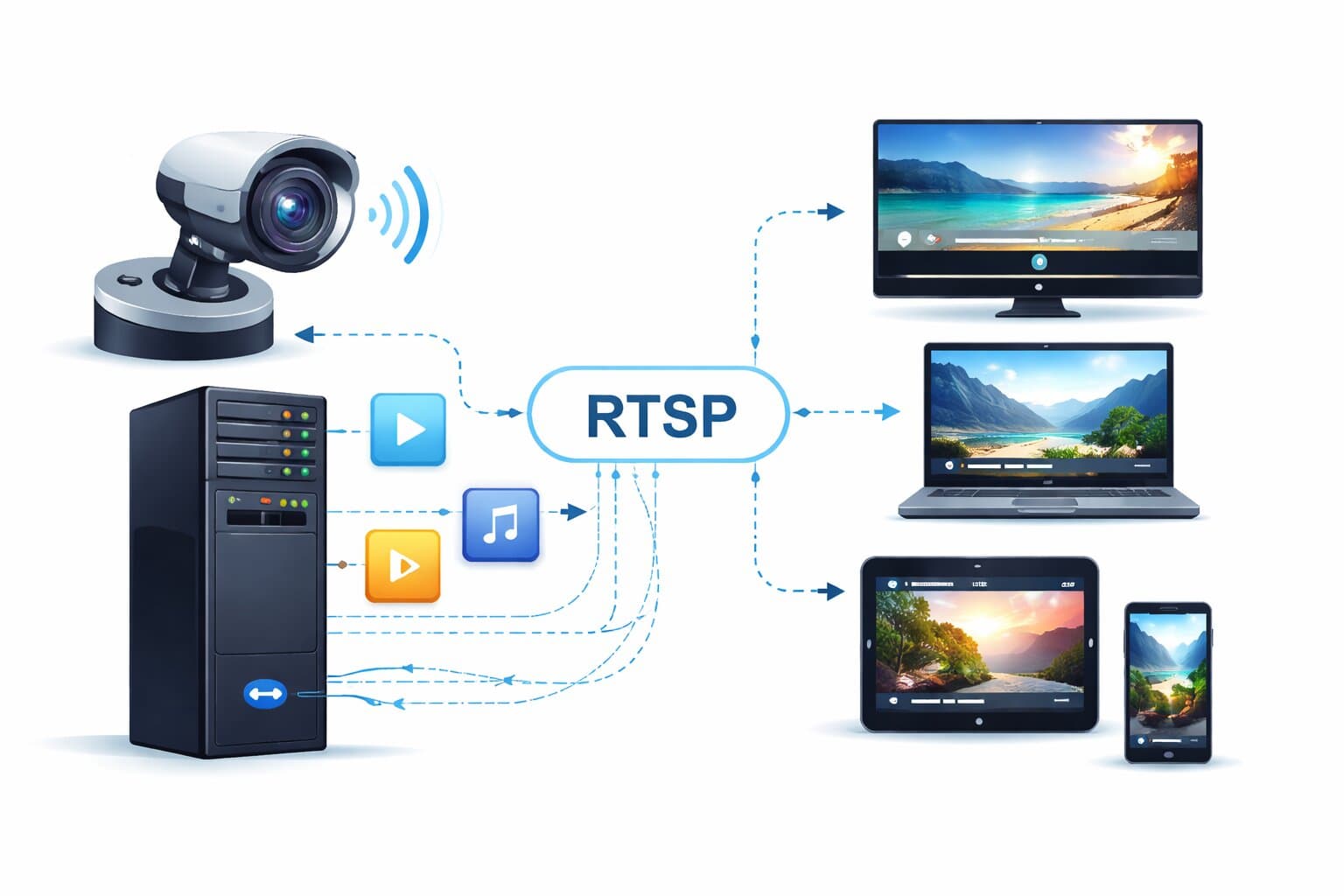
That invisible layer of control is exactly where RTSP comes in.
RTSP, or Real-Time Streaming Protocol, is a network control protocol designed to manage multimedia streaming sessions. And here is the key point many people misunderstand: RTSP does not carry the video itself. Instead, it controls how the stream is initiated, configured, paused, resumed, and terminated. The actual media transport is handled by RTP (Real-time Transport Protocol).
You can think of RTSP as a remote control for your media session. It tells the system what to do. RTP does the heavy lifting of moving audio and video packets across the network.
If you work with IP cameras, NVR systems, OBS, or custom streaming servers, understanding RTSP gives you a serious technical advantage.
What exactly is RTSP and why doesn’t it transport video?
RTSP operates at the application layer and follows a client-server model, similar in structure to HTTP. It uses text-based requests and responses. However, unlike HTTP, which transfers content directly, RTSP is responsible for session control.
In practical terms, RTSP handles:
- session negotiation,
- media description exchange,
- transport configuration,
- playback control.
Once the session is established, RTP carries the actual audio and video packets, usually over UDP for low latency.
By default, RTSP runs over TCP or UDP on port 554. It supports authentication (Basic and Digest), multiple media tracks, and synchronization using timestamps and sequence numbers embedded in RTP packets.
This separation between control (RTSP) and transport (RTP) is one of the reasons RTSP is so efficient in real-time environments like surveillance systems.
How an RTSP session actually works
Let’s walk through a typical connection process. Imagine VLC or OBS acts as the client, and an RTSP server (for example, rtsp-simple-server or a camera’s built-in server) acts as the host.
The communication usually follows this sequence:
- First, the client sends an OPTIONS request to determine which methods the server supports.
- Next comes DESCRIBE. The server responds with an SDP (Session Description Protocol) file. This file contains critical information such as codecs, bitrate, media tracks, and transport details.
- Then the client sends SETUP. During this phase, transport parameters are negotiated. The client and server decide whether to use UDP or TCP and which ports will carry the RTP stream.
- Finally, the PLAY command is issued. At that point, RTP packets begin flowing, carrying the actual video and audio.
This structured handshake ensures that both sides agree on how the stream will operate before any media data is transmitted. It is predictable, standardized, and reliable - which is why RTSP remains dominant in professional surveillance systems.
Core RTSP commands you should know
RTSP is built around a set of clearly defined control commands. The most important ones include:
- OPTIONS - Queries server capabilities.
- DESCRIBE - Retrieves the SDP description of the stream.
- SETUP - Negotiates transport parameters.
- PLAY - Starts streaming.
- PAUSE - Temporarily stops playback.
- TEARDOWN - Terminates the session.
- GET_PARAMETER / SET_PARAMETER - Retrieves or modifies session parameters.
Each command serves a precise function within the session lifecycle. This modular structure makes RTSP flexible and powerful, especially in environments requiring precise control.
RTSP vs RTMP - understanding the difference
Many people confuse RTSP with RTMP, but they are designed for different purposes.
RTMP was developed primarily for delivering streams to internet platforms such as YouTube or Twitch. It integrates well with CDNs and web-based distribution systems.
RTSP, on the other hand, focuses on session control and low-latency streaming within controlled network environments. It is ideal for IP cameras, industrial monitoring, manufacturing systems, and local surveillance networks.
If you are building a system centered around IP cameras and local servers, RTSP is typically the better architectural choice.
Security considerations and encrypted variants
Standard RTSP does not encrypt traffic. For secure environments, RTSPS (RTSP over TLS) can be used. This typically runs on port 322.
Another practical approach is interleaving RTP over TCP. This allows the stream to pass through firewalls that block UDP traffic.
In production environments, additional best practices include:
- Network segmentation using VLANs
- Strong Digest authentication
- Restricting port forwarding
- Using reverse proxies (e.g., NGINX) to convert RTSP into HLS for browser access
Security architecture matters, especially when cameras are exposed to external networks.
Using RTSP in OBS and monitoring systems
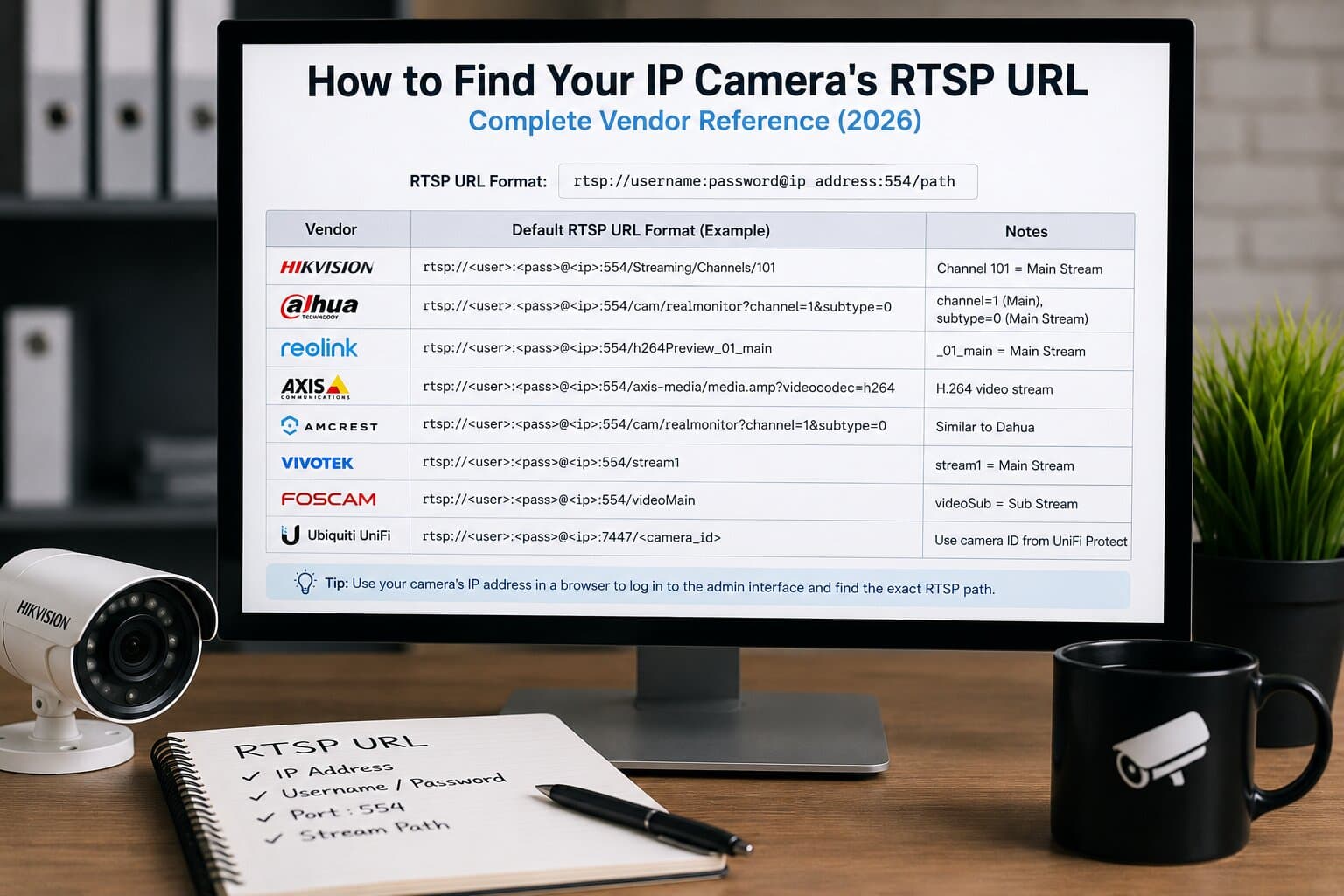
Most professional IP cameras (such as those from Dahua or Reolink) expose RTSP streams. A typical RTSP URL looks like this:
rtsp://username:password@ip_address:554/stream
In OBS, you can add this as a Media Source. If bandwidth is limited, lowering resolution to 720p or reducing bitrate can significantly improve stability without sacrificing usability.
In advanced setups, a common pipeline looks like this:
Camera → RTSP → Local server → Transcoding → RTMP or HLS distribution
This architecture allows you to maintain low latency internally while distributing content in web-friendly formats externally.
Limitations of RTSP
Despite its strengths, RTSP does have limitations.
Modern web browsers do not natively support RTSP. This means streams must be converted to HLS or WebRTC for browser playback.
UDP traffic can be blocked by restrictive firewalls, requiring TCP fallback.
RTSP also lacks built-in CDN scalability, making it less suitable for large-scale public internet broadcasting.
However, in controlled, low-latency environments, these limitations are often irrelevant.
Why RTSP remains essential in professional streaming?
RTSP has been around for decades, yet it continues to be a foundational protocol in real-time media systems.
Why? Because it is structured, efficient, and optimized for minimal delay. In surveillance and industrial monitoring, latency is more critical than flashy web compatibility. Immediate response matters more than browser-native playback.
If you are working with IP cameras, OBS integrations, or custom streaming servers, mastering RTSP gives you a deeper understanding of how your system truly operates. And in real-time streaming architecture, control is everything.